College sticker prices still make headlines, but the bill many families actually face looks different. The College Board’s new Trends in College Pricing and Student Aid 2026 report, released this week, estimates that the average net cost of attendance for first-time, full-time in-state students at public four-year colleges is about $21,660 in 2026–27 — roughly 14% lower than a decade ago after inflation and grant aid.
That figure covers tuition and fees, housing and food, books and supplies, transportation and other expenses, minus grants that do not need to be repaid. It is not a promise that every campus is cheaper. It is a national average that helps parents and students separate published prices from what people typically pay.
What the College Board measured in 2026–27
Published (sticker) tuition and fees still rose in dollar terms this year, but most of those increases stayed under the general inflation rate of 3.3%. Average sticker tuition and fees for full-time undergraduates are:
- Public four-year in-state: $12,290 (up $350, or 2.9%, from 2025–26)
- Public four-year out-of-state: $32,730
- Public two-year in-district: $4,210
- Private nonprofit four-year: $46,350
Over the full decade from 2016–17 to 2026–27, inflation-adjusted published tuition and fees fell 8% for public four-year in-state students, fell 12% for public two-year in-district students, and were roughly unchanged at private nonprofit four-year colleges. That decade-long slowdown is a sharp break from the 20%-plus jumps common in earlier decades.
Full student budgets (before aid) still look large: about $32,030 for public four-year in-state students and $67,610 for private nonprofit four-year students, according to the report’s enrollment-weighted averages.
Net price vs. sticker price: the numbers that matter
About 70% of full-time undergraduates receive grant aid that lowers the real price, College Board vice president of research Jessica Howell noted in the report’s accompanying release. Grants come from the federal government, states, colleges and private sources — and they do not have to be paid back.
After grant aid, the 2026–27 estimates look like this for first-time full-time students:
- Public four-year in-state net tuition and fees: about $1,920 (down from a peak of $4,600 in 2012–13, in 2026 dollars)
- Public four-year in-state net cost of attendance: about $21,660 (tuition/fees and housing/food after aid of roughly $16,350, plus about $5,310 for books, transport and other expenses)
- Private nonprofit four-year net tuition and fees: about $17,280
- Private nonprofit four-year net cost of attendance: about $38,540 (about 9% lower than a decade ago after inflation)
At community colleges, average grant aid has been enough to cover tuition and fees for first-time full-time in-district students since 2009. Living costs remain the hard part: students still need an estimated $9,700 for housing and food after grant aid, plus about $6,530 for books, transportation and other expenses.
Coverage from Inside Higher Ed and The Washington Post both emphasize the same point the College Board makes: sticker prices get the attention, but net prices tell families more about the check they will write.
Why net costs fell even when headlines feel expensive
Several forces are working at once:
- Slower sticker growth. Public-college tuition rises have stayed below overall inflation for several years.
- More grant aid per student. At public four-year colleges, average grant aid per first-time full-time in-state student rose about 92% after inflation between 2006–07 and 2026–27, to an estimated $10,370.
- Institutional discounts. At private nonprofit colleges, most grant aid is institutional — effectively a discount from the published price. In recent IPEDS data cited by the College Board, about 88% of first-time full-time students in that sector received some federal, state or institutional grant aid.
- Pell Grant expansion. The maximum Pell Grant rose to $7,395 and has stayed there; eligibility changes also widened who can qualify. Total Pell spending was estimated at about $39.5 billion in 2025–26.
None of that erases regional gaps. Published in-state public four-year tuition still ranges from roughly $6,360 in Florida and $7,690 in North Carolina to more than $18,000 in New Hampshire, Vermont and New Jersey. Net price calculators on each campus remain essential.
Borrowing is down too — but not for everyone
The same report shows student borrowing continuing to ease from its early-2010s peak. In 2025–26, students and parents borrowed a total of about $105.0 billion in federal and nonfederal loans, down from a peak of $168.2 billion (in 2025 dollars) in 2010–11.
Among bachelor’s degree recipients who started and finished at the same public or private nonprofit four-year school, 47% of 2024–25 graduates borrowed, with average debt of about $30,220 per borrower. Five years earlier, 55% borrowed an average of $35,350 (in 2025 dollars).
Undergraduate federal loan volume fell by more than half from 2010–11 to 2025–26 after inflation, while graduate borrowing fell more slowly. That shift means graduate students now take a larger share of annual federal education loans even though they are a smaller share of enrollment. Families comparing options may still want a clear plan for navigating student loans before signing anything.
What families should do with these numbers
A national average is a starting point, not a quote for your student. Practical next steps:
- Ignore sticker price as the final word. Use each school’s net price calculator and compare award letters side by side — grants first, then loans and work-study.
- Stack free money early. File the FAFSA as soon as your window opens, chase state grants, and treat scholarships as a project, not a last-minute scramble. Our guide to finding and winning scholarships walks through a practical search process.
- Budget living costs separately. Housing, food, books and transport often dwarf net tuition at public colleges. Ask whether living at home, a meal plan or used textbooks changes the monthly cash need.
- Build a college sinking fund. Even a modest monthly transfer helps. If you are organizing cash for 2026 goals, sinking funds are a simple way to earmark tuition deposits, travel and setup costs without raiding everyday spending money.
- Re-run the math for out-of-state and private options. Out-of-state public sticker prices average about $32,730 before aid. Private net costs average far below the $46,350 sticker, but the gap varies wildly by school.
What this does — and does not — mean
Lower average net prices do not mean college feels cheap for every household. Housing shortages near campuses, rising food costs and uneven state funding still hit families unevenly. Students who receive little or no grant aid can still face something close to the full published budget. And averages hide the difference between a flagship research university and a regional campus.
What the 2026 data does show is a quieter story than the sticker-price headlines: after grants and inflation, many first-time students at public four-year colleges are looking at a lower real net cost than their counterparts a decade ago, borrowing less on average when they do borrow, and getting more of their aid in the form of grants rather than loans.
For parents and students starting applications this winter, that is useful context — as long as you still dig into the specific award letter in front of you.
FAQ
What is the average net cost of public college in 2026–27?
The College Board estimates about $21,660 for first-time, full-time in-state students at public four-year colleges. That is the net cost of attendance after grant aid, including living expenses.
Are college tuition sticker prices going down?
In current dollars, average sticker tuition still edged up this year. After inflation, published tuition and fees are lower than a decade ago at public colleges and roughly flat at private nonprofit four-year colleges.
Do community college students pay tuition after grants?
On average, grant aid has covered tuition and fees for first-time full-time in-district community college students since 2009. Housing, food and other living costs are still substantial.
Where does the College Board get these numbers?
Published prices come from College Board’s Annual Survey of Colleges. Grant aid and net-price estimates draw on federal IPEDS Student Financial Aid data, with recent years projected where final aid data are not yet available.
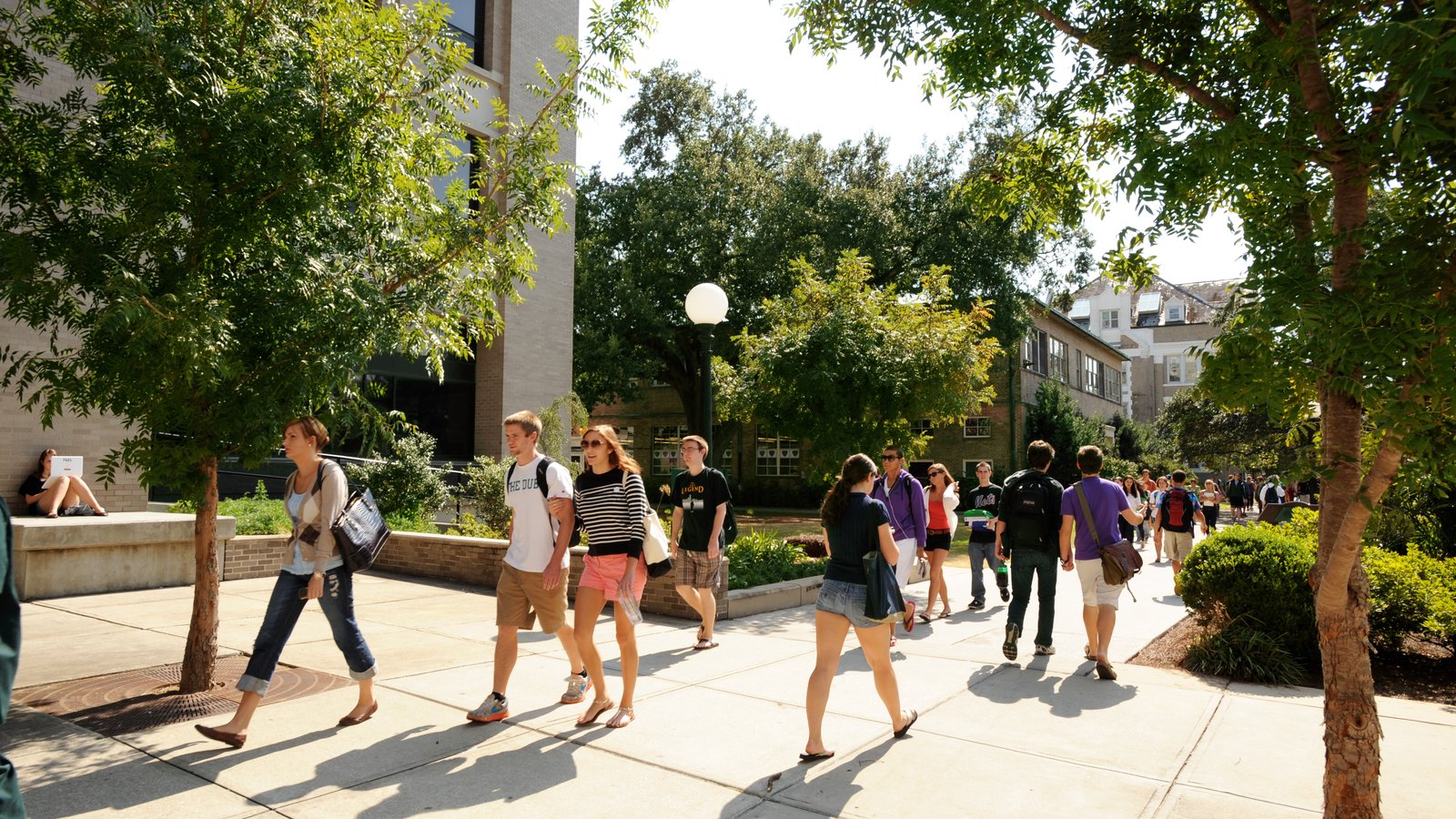
Featured image: Students on Tulane University campus, New Orleans, October 2010, by Tulane Public Relations, CC BY 2.0, via Wikimedia Commons (cropped).