Yes, flu season 2026 has started early in the U.S., and it’s picking up speed. The CDC says flu activity is “higher than typically observed at this time of year,” with seven states at high levels and Louisiana the hardest hit. Nearly every case so far is an H1N1 strain of influenza A. Early lab data suggest this year’s vaccine still recognizes it. Below are the affected states, the symptoms to watch for and what the timing means for Thanksgiving.
How early and how bad is flu season 2026?
In its weekly FluView report published Nov. 13, the Centers for Disease Control and Prevention said several flu indicators kept rising in the week ending Nov. 7. In clinical labs, 11.3% of respiratory samples tested positive for flu (5,911 of 52,287), and 99.2% of those positives were influenza A.
The CDC estimates that so far this season there have been at least 2.6 million flu illnesses, 36,000 hospitalizations and 2,100 deaths. Five flu-associated deaths in children have been reported, two of them in the latest week. The Associated Press, in a report carried by the Los Angeles Times, noted that more than 3% of doctor’s office visits that week were for flu-like illness, a sign that the season is truly underway.
To put that in context, The Independent compared the figures with 2023, the last time the CDC reported season totals at this point in the year: about 780,000 illnesses, 8,000 hospitalizations and 490 deaths.
There’s an important caveat. The CDC stresses that “an earlier increase in activity does not necessarily lead to a higher seasonal peak or greater overall severity.” Its preliminary severity assessment currently rates the season as low for every age group, although that could change as activity grows.
Which states have the most flu right now?
The surge began in the South and West. According to the AP, seven states reported high flu activity in the week ending Nov. 7, up from two the week before:
- Louisiana, the only state in the “very high” category
- California
- Oregon
- South Carolina
- Tennessee
- Texas
- Washington
Fox News reported that New York, Massachusetts and Hawaii were in the moderate category on the CDC’s outpatient illness map. In Louisiana, almost 3,500 people visited emergency rooms with flu-like illness that week, the Louisiana Radio Network reported. Dr. Fred Lopez of LSU Health New Orleans pointed to the state’s low flu vaccination rate and its higher share of uninsured residents.
Maps change every week, so check your state health department’s flu page for the latest picture.
What flu strain is going around?
Almost all of it is influenza A(H1N1)pdm09, a descendant of the 2009 pandemic strain that has circulated every season since. Public health labs subtyped 460 influenza A samples that week, and 455 of them (98.9%) were H1N1. Most belong to a genetic group called subclade D.3.1.1. The CDC says it is seeing “more genetic diversity” among these H1N1 viruses than before.
The AP reported that the strain has mutations that could help it slip past the immune system more easily. Even so, early lab work is reassuring. Of 147 H1N1 viruses the CDC tested against this season’s vaccine reference strain, 140 (95.2%) were well recognized. Johns Hopkins immunologist Andrew Pekosz told reporters that, for now, “there is no cause for concern,” though nobody will know the vaccine’s real-world effectiveness for months.
Flu symptoms to watch for
According to the CDC, flu symptoms usually come on suddenly and can include:
- Fever or feeling feverish, plus chills (not everyone with flu has a fever)
- Cough and sore throat
- Runny or stuffy nose
- Muscle or body aches and headaches
- Fatigue
- Vomiting and diarrhea, which are more common in children than adults
Is it a cold or the flu?
Colds tend to start gradually, with sneezing, a stuffy nose and a sore throat. Flu usually hits abruptly. The CDC notes that fever is common with flu and typically lasts three to four days, and that body aches, headache and fatigue are more typical of flu than of a cold.
When to get medical care right away
The CDC lists emergency warning signs. In adults, these include trouble breathing, persistent chest or abdominal pain or pressure, confusion, seizures and severe weakness. In children, watch for fast or labored breathing, bluish lips or face, dehydration, a fever above 104°F that medicine doesn’t bring down, and any fever in a baby younger than 12 weeks. For anyone, a fever or cough that improves and then comes back worse is also a warning sign.
People at higher risk of serious complications include adults 65 and older, pregnant women, children under 5 (especially under 2) and people with conditions such as asthma, diabetes or heart disease. If you look after an older relative, our guide to National Family Caregivers Month and how to support caregivers has more ideas for staying organized during a busy season.
Flu shots and Thanksgiving timing
The CDC recommends a flu vaccine every season for everyone 6 months and older, with rare exceptions. All U.S. flu vaccines this season are trivalent, meaning they protect against an H1N1 strain, an H3N2 strain and a B/Victoria strain.
Timing matters this year. According to the CDC’s key facts on the flu vaccine, protective antibodies develop about two weeks after vaccination. Thanksgiving is Thursday, Nov. 26, so a shot this weekend won’t be at full strength by the holiday. It will still help in the weeks after, when flu traditionally peaks. Flu activity commonly peaks between December and February, and last season surged in late December.
“If you haven’t been vaccinated, you should get vaccinated now,” Lopez told the AP. He added that people who are currently quite sick should wait until they recover. People who already had flu this fall should still get a shot, because more than one strain often circulates. If you don’t have a regular doctor, here’s how to choose a primary care provider before the winter rush. Pharmacies also give flu shots.
Vaccination rates have slipped. The Independent, citing CDC data, reported that fewer than 44% of Americans got a flu shot last season, down from more than half in 2021.
How to keep the flu out of your holiday plans
Doctors expect Thanksgiving travel and gatherings to speed up the spread. A few practical steps from CDC guidance:
- Stay home if you’re sick. The CDC’s respiratory virus guidance says you can return to normal activities once your symptoms have been improving overall and you’ve been fever-free without fever-reducing medicine for at least 24 hours. For the next five days, take extra precautions, such as masking or distancing.
- Protect high-risk guests. Better ventilation, frequent handwashing and keeping sick family members away from older relatives and babies all help.
- Call a doctor early. Prescription flu antivirals work best when started as early as possible. The CDC says that’s especially important for people at higher risk of complications.
- Plan your trip with a buffer. If you’re hitting the road, see the best and worst times to drive and fly for Thanksgiving 2026, and pack basics like a thermometer and tissues.
What happens next
The CDC’s FluSight forecasts predict that national flu hospital admissions and ER visits will likely keep rising through the week ending Nov. 28. It projects 8,300 to 34,400 new flu hospital admissions that week. We’ll update this article as new weekly data comes in.
Frequently asked questions
Is flu season 2026 worse than usual?
It is earlier than usual, not necessarily worse. Activity is higher than typical for mid-November, but the CDC currently rates severity as low and says an early start doesn’t predict a higher peak.
What flu strain is going around in 2026?
Mostly influenza A(H1N1)pdm09, subclade D.3.1.1. It accounted for 98.9% of subtyped influenza A samples in the CDC’s latest weekly report.
Does the 2026-2027 flu shot cover this strain?
Early CDC lab testing found that 95.2% of the H1N1 viruses it tested were well recognized by the vaccine’s reference strain. Real-world effectiveness estimates come later in the season.
How long does it take a flu shot to work?
About two weeks, according to the CDC.
This article is for general information only and isn’t medical advice. Talk to a doctor or pharmacist about your own situation.
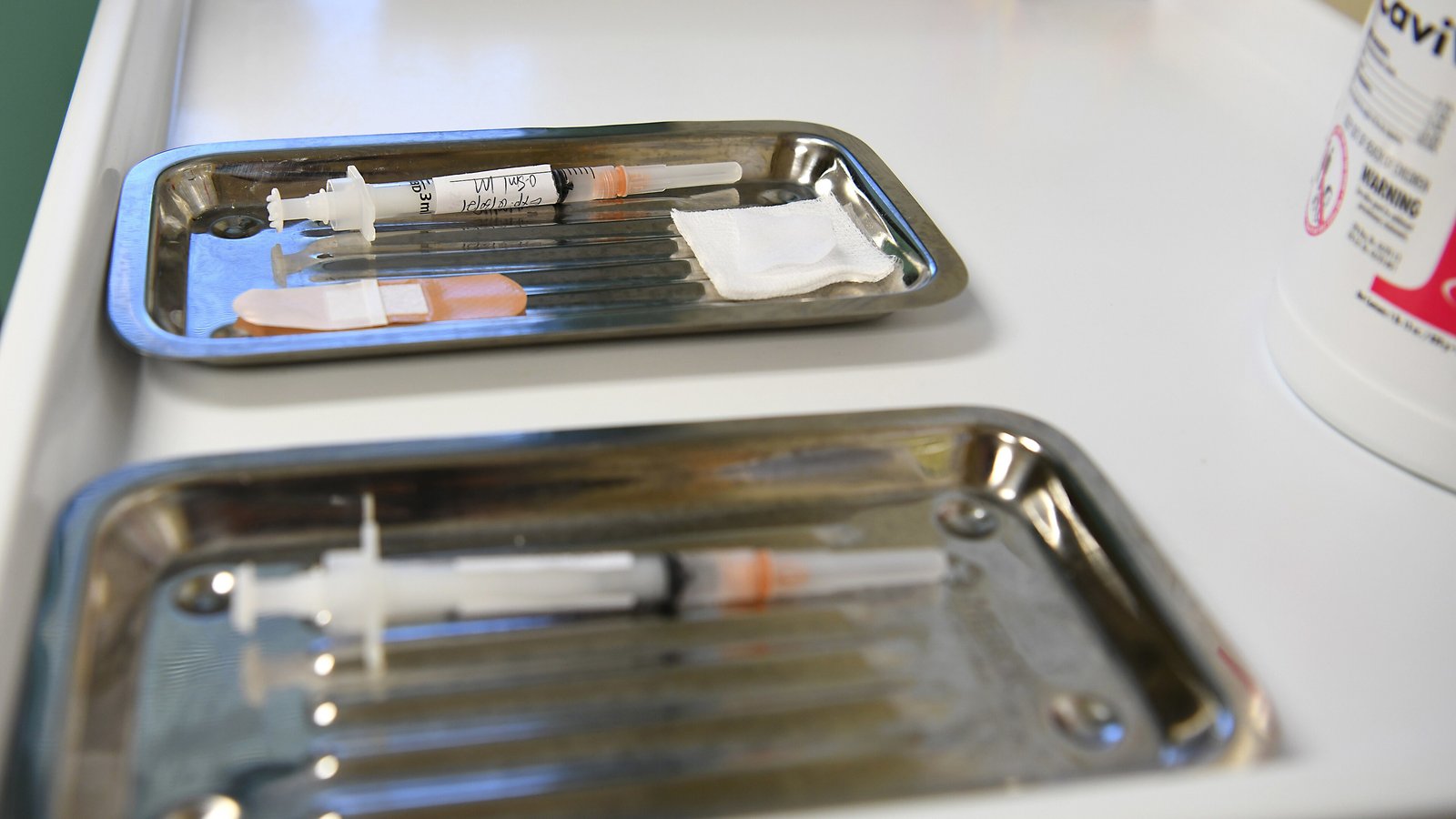
Featured image: flu shots prepared for a vaccination event at Vandenberg Air Force Base, California. U.S. Space Force photo by Tech. Sgt. Brittany Murphy, public domain via Wikimedia Commons (cropped).