SpaceX is reportedly in talks to buy Boost Mobile or use its network. Here’s what was reported, why SpaceX wants a phone carrier, and what it means for Boost customers right now.
Plain-English guides to money, tech, health, home and everyday life.

 Liafi Studio Editors
SpaceX is in talks to buy Boost Mobile from EchoStar, or at least to gain access to the network Boost uses, according to a Washington Post report published Nov. 2, 2026. No deal has been announced, and neither company has confirmed the talks. If you’re one of Boost’s roughly 7 million customers, the short answer is that nothing changes for you today: your plan, number and phone keep working exactly as they did yesterday.
Here’s what was reported, why Elon Musk’s rocket company wants a phone carrier, and what it could mean for your monthly bill down the road.
According to the Washington Post, as summarized by Reuters, SpaceX has held talks with EchoStar in recent months about launching its own branded wireless service through a deal with the company. Two options are reportedly on the table: buying Boost Mobile outright, or getting access to the network Boost leases from AT&T and T-Mobile.
Musk has been personally involved and met EchoStar chairman Charlie Ergen last month, the report said. SpaceX and EchoStar did not immediately respond to Reuters’ requests for comment.
Markets reacted quickly. EchoStar shares rose about 3 to 4 percent in premarket trading, while T-Mobile slipped about 2 percent and AT&T and Verizon edged lower, according to Investing.com and Reuters.
SpaceX has made no secret of its goal. On its recent earnings call, chief financial officer Bret Johnsen said the company aims to “become a major mobile carrier … in the United States,” Investing.com reported. The plan is called Starlink Mobile: a hybrid network that combines Starlink’s satellites with ground-based infrastructure, so a regular phone could stay connected in cities, in buildings and in places where there are no cell towers at all.
The satellites are only half of that picture. To compete with AT&T, Verizon and T-Mobile, a carrier also needs things SpaceX doesn’t have yet: paying subscribers, stores, billing systems, customer service and a working ground network in dense cities. Boost already has all of those. EchoStar reported 7.38 million wireless subscribers at the end of the second quarter, mostly Boost Mobile and Gen Mobile customers. Buying Boost, or plugging into its setup, would give SpaceX a ready-made customer base instead of starting from zero.
This report didn’t come out of nowhere. SpaceX and EchoStar already have a long history:
Boost is no longer the “fourth network” EchoStar once tried to build. After selling most of its spectrum to AT&T (about $23 billion) and SpaceX in 2025, EchoStar shut down its own 5G radio network. Boost now runs as what it calls a hybrid network operator: Boost keeps its own cloud-based 5G core, billing and account systems, while AT&T’s towers provide the main coverage. Customers can also roam onto T-Mobile’s network, and Boost’s own network disclosures say your service could be powered by either AT&T or T-Mobile.
That setup is exactly why any SpaceX deal is complicated. According to the Post, Boost’s network-leasing agreements may not transfer to a new owner without AT&T’s and T-Mobile’s permission. In other words, the two carriers SpaceX wants to compete with could have a say in whether it happens. SpaceX reportedly approached Verizon and other major carriers first about using their networks, and those talks didn’t lead to a deal.
Because no deal exists yet, everything below is about possibilities, not announced changes.
Your Boost plan, price and coverage stay the same. Talks between companies can take months and can fall apart entirely. Even if a deal were signed tomorrow, it would likely need regulatory review before closing.
Boost customers were already promised access to Starlink Direct to Cell under the 2025 agreement. A closer tie-up could speed up that kind of feature, which is designed to keep phones connected in dead zones on roads, trails, lakes and rural areas. No launch date for Boost customers has been announced.
Analysts quoted by Reuters pointed out that building a fourth major carrier is expensive. SpaceX would need to spend heavily on ground infrastructure, customer service, phone discounts and promotions, areas where AT&T, Verizon and T-Mobile already have huge operations. If SpaceX does push into the market, more competition has historically been good news for shoppers looking for cheaper plans. But that’s a long-term “maybe,” not something to plan your budget around yet.
Better phone coverage matters most for people who live far from towers or on tight budgets. We’ve written before about how mobile connectivity helps bridge the digital divide and access to mobile service for low-income households, and how 5G changed what our phones can do.
Not officially. The Washington Post reported on Nov. 2, 2026 that SpaceX is in talks to buy Boost Mobile or use its network. No agreement has been announced, and SpaceX and EchoStar haven’t publicly confirmed the talks.
Not now. Your plan and coverage stay the same. Any future change would be announced by Boost.
Boost runs its own 5G core but relies mainly on AT&T’s towers for coverage, with access to T-Mobile’s network as well.
It’s SpaceX’s planned phone service, which would combine Starlink satellites with ground-based spectrum and infrastructure so standard phones can connect almost anywhere, including indoors and in dead zones.
No date has been announced. SpaceX’s 800 MHz spectrum purchase still needs FCC approval, and the final transfer of EchoStar’s spectrum to SpaceX is targeted for late 2027.
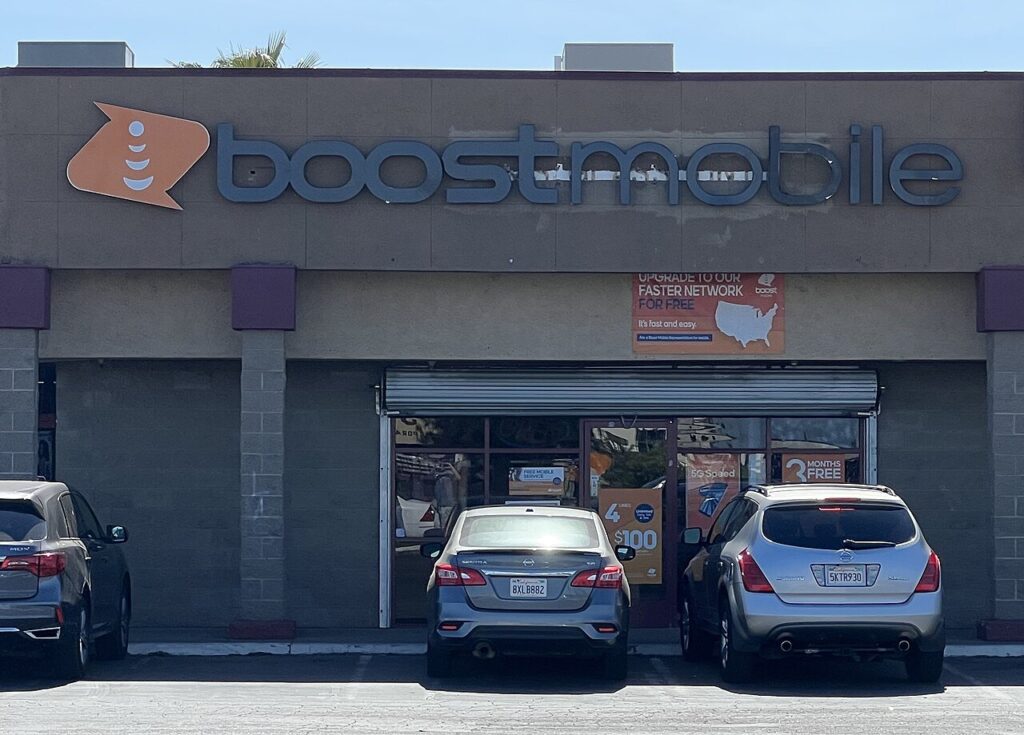
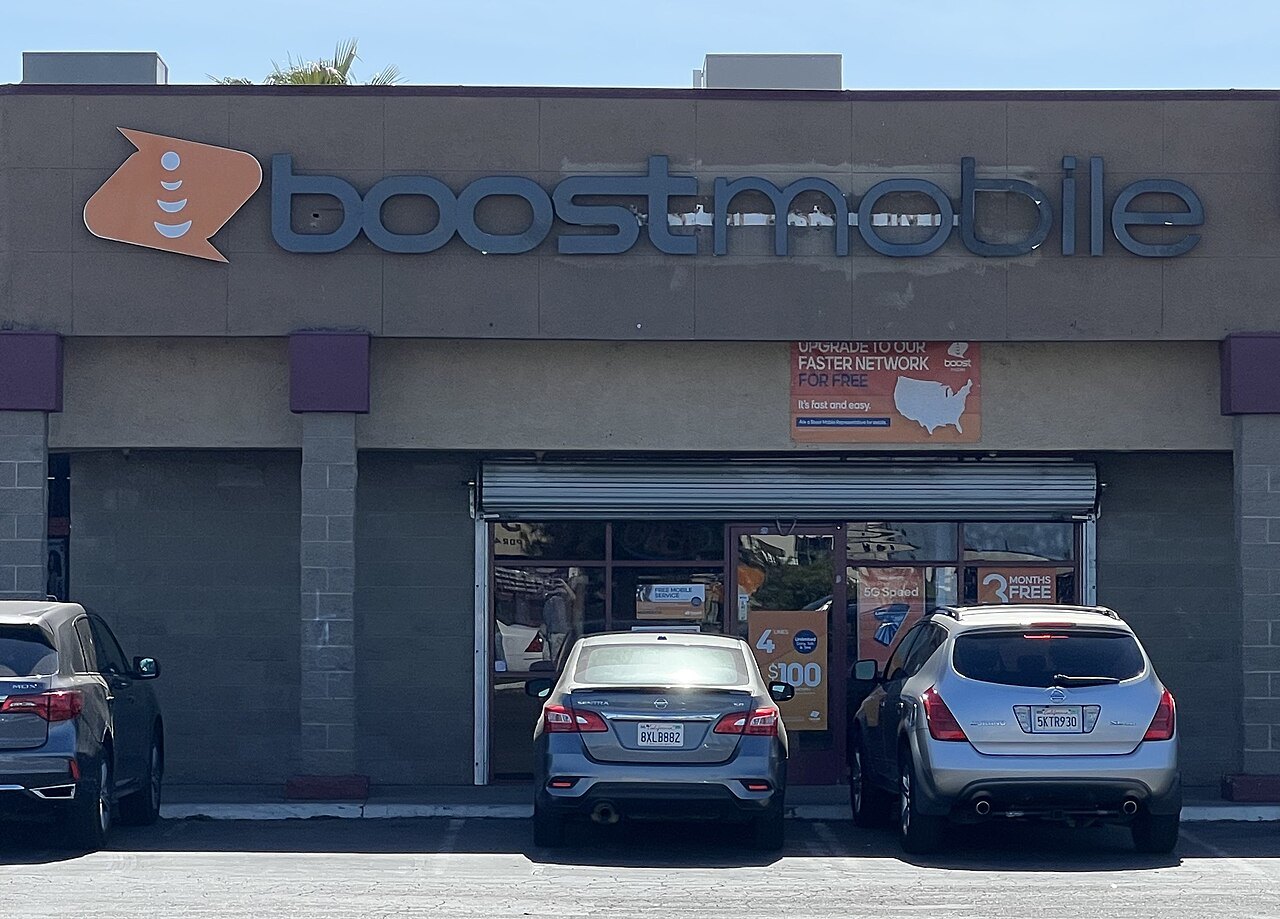
Featured image: Boost Mobile store in Stockton, California, by TaurusEmerald, via Wikimedia Commons, licensed CC BY-SA 4.0.