If your flight was canceled during the FAA’s nationwide ground stop on Friday, Nov. 13, 2026, you can get a full refund to your original payment method, even on a nonrefundable or Basic Economy ticket, as long as you choose not to travel and don’t accept a credit or voucher. If you still want to fly, every major U.S. airline has issued a travel waiver that lets you rebook without a change fee. Below is what caused the shutdown, how many flights it hit, each airline’s waiver window, and how to recover money for hotels, event tickets and other costs.
What happened during the FAA ground stop?
At about 3:30 p.m. Eastern on Nov. 13, the Federal Aviation Administration hit what it called a technical problem and declared a nationwide ground stop shortly after. According to the FAA’s own Q&A, its legacy telecommunications equipment became unstable when data began flooding the network at a rate of 1,000 connection attempts every 4 to 5 seconds, which disrupted aircraft communications and radar feeds. Instability spread to 17 of the FAA’s 22 Air Route Traffic Control Centers.
Roughly 3,500 aircraft that were already in the air landed safely, and the FAA says some radio frequencies and radar feeds kept working throughout. Air traffic resumed at 8:15 p.m. ET the same evening. Reuters described it as the longest nationwide shutdown since the Sept. 11, 2001, attacks.
Was it a cyberattack?
Officials say no. The FAA says it has “no indication” of a cyberattack or outside actor. The initial investigation points to two sites: a radio communications facility in El Dorado, Arkansas, where contractor L3Harris was installing a new router to replace old copper lines, and a radar site in Amarillo, Texas. Once L3Harris blocked those two locations, the network stabilized.
Transportation Secretary Sean Duffy said on Sunday that the routers are being tested at L3Harris’s lab in Florida, with the FBI offering help. “We think it was the installation or the router that was the bad actor,” he said, according to a Transportation Department summary of his Sunday interviews. As a precaution, the broadcast function has been switched off on the similar routers across the system.
How many flights were canceled?
The FAA says operators canceled about 12,462 flights on Nov. 13, including 9,082 by major airlines, though it notes not every cancellation was caused directly by the ground stop. Flight data firm Cirium estimated that about 1.5 million travelers had their plans upended, NerdWallet reported. With planes and crews out of position, cancellations and delays carried into the weekend, and Duffy said Sunday he expected flights to be back to full capacity by Monday, Nov. 16.
Can you get a refund after the FAA ground stop?
Yes, in most cases, but the details matter. Under the U.S. Department of Transportation’s refund rules, you’re entitled to a refund of your ticket price when:
- The airline canceled your flight, for any reason, including an FAA ground stop, and you choose not to travel or accept a credit, voucher or other compensation.
- Your flight was significantly delayed or changed and you decide not to fly. For domestic trips, “significant” means arriving 3 or more hours late; for international trips, 6 or more hours. Switching your departure or arrival airport, adding connections or downgrading your cabin also counts.
The key point: a ground stop on its own doesn’t make every ticket refundable. If your flight ultimately operated close to schedule, or you chose to fly on the delayed or rebooked flight, the federal refund rule doesn’t apply.
How fast does the money come back?
Refunds must go back to your original form of payment, not as a travel credit. DOT says airlines must issue them within 7 business days for credit card purchases and within 20 days for other payment methods such as cash or check. If you booked with points or miles, you’ll generally get them redeposited, plus a refund of taxes and fees.
Watch out for default options. Some airline waiver pages offer a travel credit first. A credit isn’t a refund, so if you’d rather have the money, ask for the refund specifically.
Did you book through Expedia or another travel site?
If an online travel agency was the “merchant of record” (the company named on your card statement), it’s responsible for refunding the airfare, so contact it first. Refunds of bag or seat fees still come from the airline.
Airline travel waivers after the ground stop
If you still want to get where you were going, airlines have loosened change rules. Here’s what the biggest carriers announced, as reported by Fox News:
- American Airlines: Covers trips booked by Nov. 12 for travel Nov. 13 or 14, including Basic Economy. You can rebook in the same cabin between the same cities with no fee, or postpone for up to a year without a fee (fare differences may apply).
- Delta: Covers trips scheduled for Nov. 13 and 14. You can change flights at no extra charge if you depart on or before Saturday, Nov. 21.
- United: Change fees and fare differences are waived for Nov. 13 and 14 travelers who rebook flights departing through Friday, Nov. 20, on the same route.
- Southwest: Covers tickets for Nov. 13 through Monday, Nov. 16. You can rebook or fly standby within five days of your original date for free, or take a full refund if your flight was canceled or significantly delayed.
- JetBlue: Fare differences, change fees and cancellation fees are waived for Nov. 13 and 14 flights rebooked through Wednesday, Nov. 18.
Waiver terms differ in the fine print, so check your airline’s app or website before you change anything. Alaska and Hawaiian Airlines also posted waivers, according to NerdWallet.
How to get money back for hotels, tickets and other costs
Because the ground stop was outside the airlines’ control, carriers aren’t required to cover hotels or meals. That leaves a few other options:
- Ask the hotel or rental host directly. Many will waive a no-show or cancellation fee if you show proof of a canceled flight. It isn’t guaranteed, so ask politely.
- Resell event tickets. Concerts and games rarely refund missed tickets, so reselling on a ticket marketplace is usually the best way to get some money back.
- Check your travel insurance. NerdWallet notes that travel delay and missed-connection benefits on standalone policies may apply. Call your insurer’s assistance line rather than waiting.
- Read your credit card’s benefits. Trip delay coverage on some premium travel cards kicks in after a 6- to 12-hour delay and often lists “equipment failure” as a covered reason. Whether this event counts depends on your card’s terms, and claims can be denied.
- Keep every receipt. Save your cancellation notice, original itinerary and receipts for meals, rides and lodging in one folder.
If you checked a bag that went missing, DOT rules also entitle you to a refund of your bag fee once the bag is declared lost or significantly delayed (more than 12 hours after a domestic flight arrives). You’ll need to file a mishandled-baggage report with the airline.
Flying soon? What this means for Thanksgiving travel
The ground stop came less than two weeks before Thanksgiving, one of the busiest flying periods of the year. The FAA says the system is stable and it is safe to fly, and the problem routers have had their broadcast function disabled. Still, a few habits will help if anything goes wrong again:
- Turn on airline app notifications. Airlines must tell you about cancellations, significant delays and your right to a refund through the channel you signed up for.
- Check live airport conditions at nasstatus.faa.gov before you leave home.
- Fly earlier in the day when you can, so you have more rebooking options if your flight is canceled.
- If you’re traveling with family or friends, keep everyone on one reservation. Our tips for planning efficient group trips can help.
Heading overseas? Make sure you also know about new entry paperwork, like the Ebola attestation form for U.S.-bound flights. And if a travel refund is helping stretch the holiday budget, here’s what Thanksgiving dinner costs in 2026 and how store meal deals compare.
FAQ
How long did the FAA ground stop last?
About four hours. The FAA declared it shortly after 3:30 p.m. ET on Nov. 13, 2026, and air traffic resumed at 8:15 p.m. ET.
Do airlines have to refund nonrefundable tickets after the ground stop?
Yes, if the airline canceled your flight or delayed it significantly (3+ hours domestic, 6+ hours international) and you chose not to travel or accept a credit. If you flew anyway, the federal rule doesn’t require a refund.
Will airlines pay for my hotel after the ground stop?
Usually not, because the disruption was outside the airlines’ control. Travel insurance or credit card trip delay coverage may help, depending on the policy.
What caused the FAA outage?
The FAA says data flooding its legacy telecom network made communications and radar feeds unstable. Investigators are focused on a newly installed router in El Dorado, Arkansas, and a site in Amarillo, Texas. Officials say there’s no sign of a cyberattack.
This article explains publicly posted federal rules and airline policies as of Nov. 16, 2026. Airline waivers can change, so confirm details with your airline before rebooking or canceling.
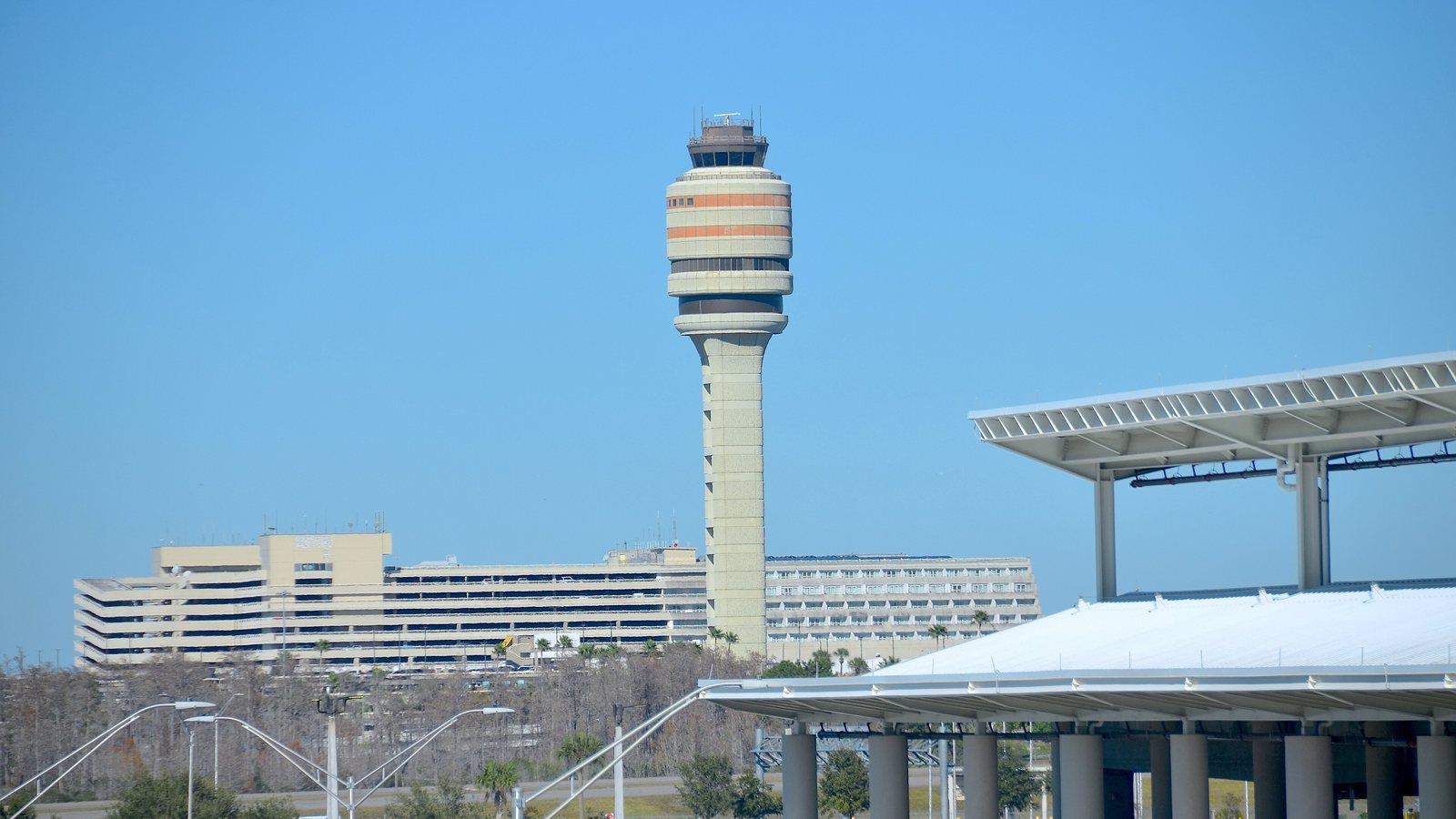
Featured image: Air traffic control tower at Orlando International Airport. Photo by Olga Ernst via Wikimedia Commons, CC BY-SA 4.0 (cropped).