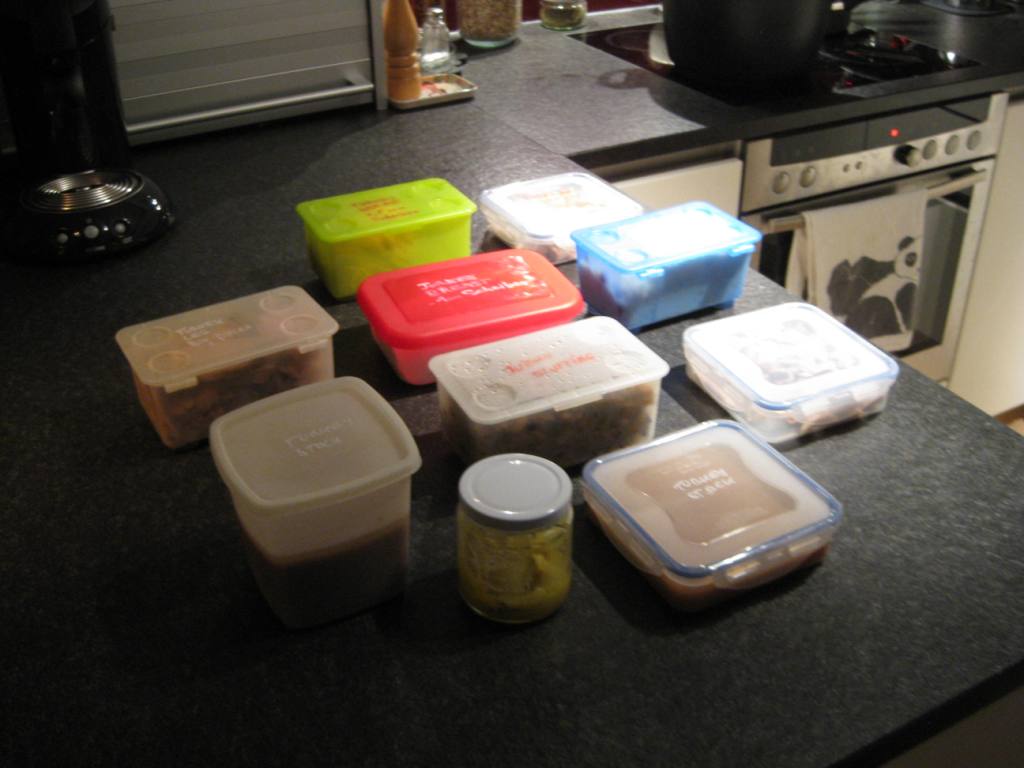
Thanksgiving leftovers are safe in the refrigerator for up to four days, which makes Monday, Nov. 30, 2026 the deadline to eat them or move them to the freezer. That’s the U.S. Department of Agriculture’s guidance, and it comes with one catch that matters more than the four-day clock: the food has to go into the fridge within two hours of coming out of the oven.
Here’s how long each part of the meal lasts, how to store and reheat it, and when it’s time to throw something out.
Thanksgiving leftovers at a glance
- Get it cold fast: Refrigerate turkey, sides, gravy and pie within 2 hours, or within 1 hour if the room or outdoor setting is above 90°F.
- Fridge: Up to 4 days at 40°F or below. For a Thursday dinner, that’s Monday, Nov. 30.
- Freezer: Safe indefinitely at 0°F, with the best quality in roughly 2 to 6 months, depending on the dish.
- Reheat: Heat leftovers to 165°F. Bring gravy to a rolling boil.
- When in doubt: Throw it out. You can’t see, smell or taste most of the bacteria that cause food poisoning.
How long are Thanksgiving leftovers good in the fridge?
In a Nov. 13, 2026 holiday bulletin, USDA’s Food Safety and Inspection Service (FSIS) said refrigerated leftovers are safe for up to four days and can be frozen for longer storage. The agency’s Thanksgiving food safety page puts it more simply: you have until the Monday after Thanksgiving to eat them.
Iowa State University food safety specialist Anirudh Naig called Monday, Nov. 30, this year’s “use it or freeze it” deadline in a Nov. 19 extension article. Count from the day the food was cooked, not the day you last opened the container. If you roasted the turkey on Wednesday to save time on Thursday, your deadline moves up a day.
How long each dish lasts
FSIS’s guide to handling cooked turkey dinners lists these storage times. Freezer times are for quality only. Food kept frozen at 0°F stays safe indefinitely.
| Leftover | Refrigerator (40°F or below) | Freezer (0°F) for best quality |
|---|
| Cooked turkey, plain slices or pieces | 3 to 4 days | 4 months |
| Turkey covered in broth or gravy | 3 to 4 days | 6 months |
| Stuffing, gravy and cooked poultry dishes | 3 to 4 days | 4 to 6 months |
| Pumpkin, pecan and other egg-rich pies | 3 to 4 days | 1 to 2 months |
FSIS’s broader cold storage chart gives the same 3-to-4-day fridge window for casseroles and most cooked leftovers, and the pie times come from USDA’s holiday pumpkin pie guidance. If you’re still figuring out how much food you’ll end up with, our breakdown of what Thanksgiving dinner costs in 2026 shows what a typical meal for 10 includes.
The 2-hour rule matters more than the 4-day rule
Bacteria grow fastest between 40°F and 140°F, a range USDA calls the “Danger Zone.” Perishable food shouldn’t sit at room temperature for more than two hours, or one hour above 90°F. After that, FSIS says to throw it out, even if it looks and smells fine.
That’s why the timing matters on Thanksgiving. The Centers for Disease Control and Prevention says Clostridium perfringens causes nearly 900,000 foodborne illnesses in the U.S. each year. Most outbreaks happen in November and December, and many have been linked to holiday foods like turkey and roast beef. The CDC says the foods most often involved are cooked in large batches and then held between 40°F and 140°F. Turkey, meat and gravy are common examples.
A simple habit helps: set a timer when the turkey reaches the table. Iowa State’s advice is to start putting leftovers away before the pie comes out.
How to store Thanksgiving leftovers
Carve the turkey off the bone
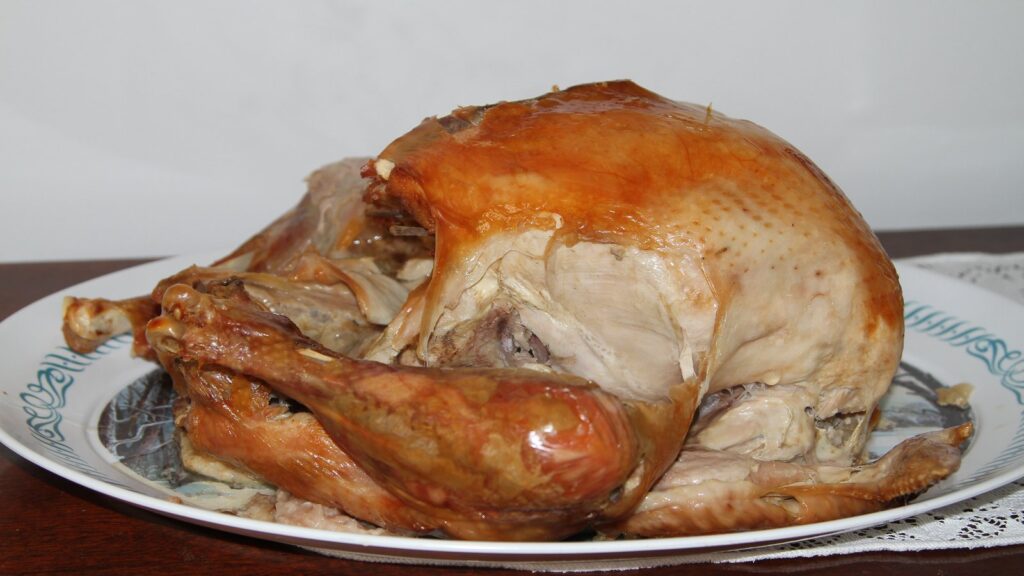
Don’t put the whole carcass in the fridge. FSIS says to cut the turkey into smaller pieces, slice the breast meat and leave legs and wings whole if you like. Iowa State recommends storing the meat separately from the stuffing and gravy.
Use small, shallow containers
A big, deep container of mashed potatoes or stuffing can stay warm in the middle for hours. USDA recommends dividing food into smaller portions in covered, shallow containers so it cools quickly to 40°F or below. The FSIS leftovers guide also says to wrap leftovers airtight or seal them in containers to keep bacteria out and moisture in.
Don’t wait for food to cool on the counter
Hot food can go straight into the refrigerator, according to FSIS. You can also chill it quickly in an ice or cold-water bath first. Letting food cool on the counter just gives bacteria more time to grow.
How to reheat leftovers safely
- Heat to 165°F, checked with a food thermometer.
- Bring gravy, soups and sauces to a rolling boil.
- Cover food while reheating to keep moisture in and help it heat all the way through.
- In the microwave, cover and rotate the dish, add a little liquid if needed, and check the temperature in several spots. FSIS says microwaves leave cold spots.
- Frozen leftovers can be reheated without thawing, in a saucepan, oven or microwave. It just takes longer.
Freezing and thawing leftovers
FSIS says it’s safe to freeze leftover turkey and trimmings even if the turkey was frozen when you bought it. Wrap everything tightly for the best quality. Covering turkey slices with broth or gravy helps them stay moist in the freezer.
When you’re ready to eat them, thaw frozen leftovers in the refrigerator, in cold water or in the microwave. Food thawed in the fridge should be eaten within 3 to 4 days. Food thawed in cold water should be cooked before you refreeze it. Food thawed in the microwave should be heated to 165°F right away. FSIS also says leftovers reheated to 165°F can be safely refrozen.
Does pumpkin pie need to be refrigerated?
Yes, if it’s homemade or a fresh bakery pie. Pumpkin, pecan, custard and other egg-rich pies should go in the fridge within two hours of baking, and leftovers keep for 3 to 4 days, according to USDA’s holiday guidance. Iowa State’s AnswerLine notes one exception: shelf-stable pies sold unrefrigerated at the store can stay out until cut, as long as you follow the label. To avoid a soggy crust, let a fresh pie cool, chill it uncovered, then wrap it loosely.
Who to call on Thanksgiving Day
The USDA Meat and Poultry Hotline is open from 8 a.m. to 2 p.m. ET on Thanksgiving Day, Nov. 26. Call 1-888-MPHotline (1-888-674-6854) or email MPHotline@usda.gov. If the turkey is still the problem, our guide on how to thaw a turkey fast or cook it from frozen also lists Butterball’s Turkey Talk-Line hours. And if you run out of containers or foil, check which stores are open on Thanksgiving 2026 before you head out.
Frequently asked questions
Is turkey still good after 5 days in the fridge?
USDA’s guidance is to eat cooked turkey within 3 to 4 days or freeze it. Past that point, throw it out. FSIS notes you can’t see, smell or taste the harmful bacteria that cause foodborne illness, so a sniff test won’t tell you.
Can I eat leftovers that sat out overnight?
No. Under USDA’s two-hour rule, perishable food left at room temperature for more than two hours should be thrown away. Don’t count on reheating to rescue it. The CDC notes C. perfringens forms spores with protective coatings, and USDA’s rule is simply to discard food that’s been left out too long.
Can I put warm food straight into the fridge?
Yes. FSIS says hot food can go directly into the refrigerator. Divide it into shallow containers first so it cools quickly and doesn’t warm up everything around it.
How long does frozen leftover turkey last?
Frozen turkey stays safe indefinitely at 0°F. For the best taste and texture, FSIS suggests eating plain turkey within about 4 months, or within 6 months if it’s covered in broth or gravy.
This guide summarizes publicly posted food safety guidance from USDA FSIS, the CDC and Iowa State University Extension. It isn’t medical advice. If you think you have food poisoning, especially if you’re pregnant, older, or have a weakened immune system, contact a healthcare provider. Featured image: Thanksgiving leftovers packed and labeled in storage containers. Photo by Andrew Nash via Wikimedia Commons, CC BY-SA 2.0.