Short answer: Yes, storms are lined up on both coasts for Thanksgiving week 2026. Monday, Nov. 23 looks like the calmest travel day. A wet, windy storm reaches the Pacific Northwest and Northern California on Tuesday, while a second storm forms in the Gulf on Tuesday night and moves up the East Coast, bringing heavy rain and strong winds to the Northeast on Thanksgiving Day, Nov. 26. Airports in Florida, Atlanta, Charlotte, Washington, Philadelphia, New York, Boston, Detroit, Chicago and San Francisco are the ones to watch.
Here’s the timing, what it means for flights and the Macy’s parade balloons, and how to protect your plans. Forecasts were current as of Sunday night, Nov. 22 (U.S. time), and the storm tracks could still shift, so check again before you leave.
Thanksgiving week storm forecast: the day-by-day timing
According to The Weather Channel’s Nov. 22 forecast, two separate systems will start hitting by Tuesday night, one in the East and one in the West. Here’s the general timeline it laid out:
East and Central U.S.
- Monday, Nov. 23: The weekend coastal storm exits New England by morning. Some lingering Northeast flight delays are possible, but conditions improve.
- Tuesday night: A new storm develops in the Southeast (AccuWeather says it takes shape in the Gulf).
- Wednesday, Nov. 25: Rain and some wind spread into the mid-Atlantic.
- Thanksgiving Day, Nov. 26: A potentially major storm in the Northeast with rain, wind and possibly wet snow in the Appalachians.
- Friday, Nov. 27: Leftover rain in New England early, then the storm moves out.
West Coast
- Tuesday, Nov. 24: A wet, windy storm from Northern California to Oregon and Washington.
- Wednesday: A second, potentially windier storm could hit the same area.
- Thursday: The heaviest rain spreads to most of the West Coast, with a better chance of mountain snow.
- Friday: More of the same as an atmospheric river keeps pushing moisture onshore.
It may not end there. The Weather Channel says some longer-range models hint at another storm forming the weekend after Thanksgiving, though it’s too early to say how strong it would be, or whether it will form at all.
Which airports could see delays?
The East Coast storm is the bigger threat to air travel. AccuWeather expects heavy rain, rising winds and low clouds to cause airline delays in this order:
- Tuesday to Wednesday: Orlando and Miami
- Wednesday: Atlanta and Charlotte
- Thanksgiving Day: Washington, D.C., Philadelphia, New York City, Boston, Detroit and possibly Chicago
AccuWeather notes that rain by itself doesn’t do much to airport operations, but fog, wind and thunderstorms do. For context, AAA expects 81.5 million Americans to travel at least 50 miles from home between Tuesday and next Monday, as ABC News reported. Our guide to the best and worst times to drive and fly for Thanksgiving 2026 covers the busiest days and hours.
San Francisco: record tides and a flood risk at SFO
On the West Coast, the main worry isn’t just rain. It’s seawater. The National Weather Service issued a coastal flood warning for the San Francisco and San Pablo Bay shorelines from Monday morning through Thursday afternoon, and ABC News reported that Wednesday morning’s high tide could approach the highest level on record in San Francisco. The cause is a mix of a full moon, high surf from back-to-back storms and El Niño-warmed ocean water.
The Los Angeles Times reported that the all-time high at San Francisco’s tide gauge is 8.66 feet, set on Jan. 27, 1983, and that this week’s forecast peak was 8.6 feet as of Sunday morning, with a chance of topping 9 feet depending on storm surge. A Weather Service meteorologist said both San Francisco International (SFO) and Oakland’s airport are at risk of flooding. On top of that, roughly 1 to 1.5 inches of rain is expected in San Francisco from Tuesday afternoon to Wednesday afternoon.
San Francisco Mayor Daniel Lurie asked people to take the warning seriously, and the city’s emergency management department suggested avoiding unnecessary travel from Monday afternoon through Wednesday. CBS San Francisco reported that SFO says it has pumping equipment ready and advises travelers to check with their airlines. Caltrans has closed the Posey Tube between Alameda and Oakland through 5 p.m. Friday.
Southern California beaches
Southern California is mostly dry, but it isn’t off the hook. The LA Times says forecasters warned of “extreme” coastal flooding risk in Orange and San Diego counties on Thanksgiving Day. Huntington Beach is closing low-lying roads from 6 a.m. to 2 p.m. Monday through Friday, including part of Pacific Coast Highway through Sunset Beach, and the Weather Service’s Oxnard office said visiting beaches is not advised, especially Wednesday and Thursday.
Will the Macy’s Thanksgiving Day Parade balloons fly?
That’s still uncertain. The 100th Macy’s Thanksgiving Day Parade steps off at 8:30 a.m. ET on Thursday and runs until about noon. Under New York City rules, the giant helium balloons can’t fly if sustained winds top 23 mph or gusts exceed 34 mph, according to FOX Weather. Even below those limits, handlers can fly the balloons lower to the street. The limits date back to the 1997 parade, when wind pushed the Cat in the Hat balloon into a lamppost.
An AccuWeather meteorologist told the New York Post that Thursday in New York should start cloudy and get windier, with northeast winds of 12 to 25 mph and gusts of 30 to 40 mph possible, and the heaviest rain in the afternoon and evening. The parade itself goes on rain or shine, so the floats, bands and performers will march either way.
Snow and power outages
This is mostly a rain event. AccuWeather says the East Coast storm is too warm for widespread snow, but wet snow or sleet could briefly fall in northern New York and New England late Thanksgiving Day and night, and a rain and wet snow mix may develop in parts of the Midwest, possibly including Chicago, Indianapolis and Detroit. By Friday, snow showers are possible in the Appalachians and eastern Great Lakes.
The bigger home concern is wind. AccuWeather warns that gusts along parts of the Atlantic Seaboard and the Appalachians could cause scattered power outages right as people are cooking. In Boston, NBC Boston says Thanksgiving night could bring up to 2 inches of rain and coastal gusts of 50 to 55 mph. In Florida, heavy rain from late Tuesday through Wednesday night could worsen ongoing flooding in the St. Johns River basin.
How to protect your Thanksgiving plans
- Travel early if you can. Monday is the calmest day, and Tuesday is generally favorable in the East.
- Turn on flight alerts in your airline’s app and check for travel waivers, which airlines often post when big storms are forecast.
- Know your refund rights. If your airline cancels your flight or significantly changes it and you choose not to travel, you’re generally entitled to a cash refund under U.S. Department of Transportation rules, even on a nonrefundable ticket. Weather is outside the airline’s control, so hotels and meals usually aren’t covered. Our explainer on getting refunds and using airline waivers after flight disruptions walks through the details.
- Leave extra time for roads near water. In the Bay Area, avoid low-lying routes around peak high tide. In Southern California, check local road closures.
- Plan for a possible outage. Charge phones and power banks, and have a backup cooking plan. FoodSafety.gov says a closed refrigerator keeps food safe for up to 4 hours without power, and a full freezer holds for about 48 hours (24 if half full).
- Shop a day early. Many stores close or cut hours on the holiday, so check what’s open and closed on Thanksgiving 2026 before a storm makes a last-minute run harder.
Thanksgiving storm forecast FAQ
What is the best day to travel for Thanksgiving this week?
Monday, Nov. 23 looks like the quietest weather day nationwide. Tuesday is generally favorable in the East, but rain and wind start on the West Coast.
Is SFO going to flood?
It’s a real risk, but not certain. Forecasters say near-record tides on Tuesday and Wednesday could push water over low points along the bay. SFO says it has pumps ready. Check your airline before heading to the airport.
Forecasts change quickly, especially for a storm that hasn’t formed yet. For the latest official watches and warnings in your area, check the National Weather Service.
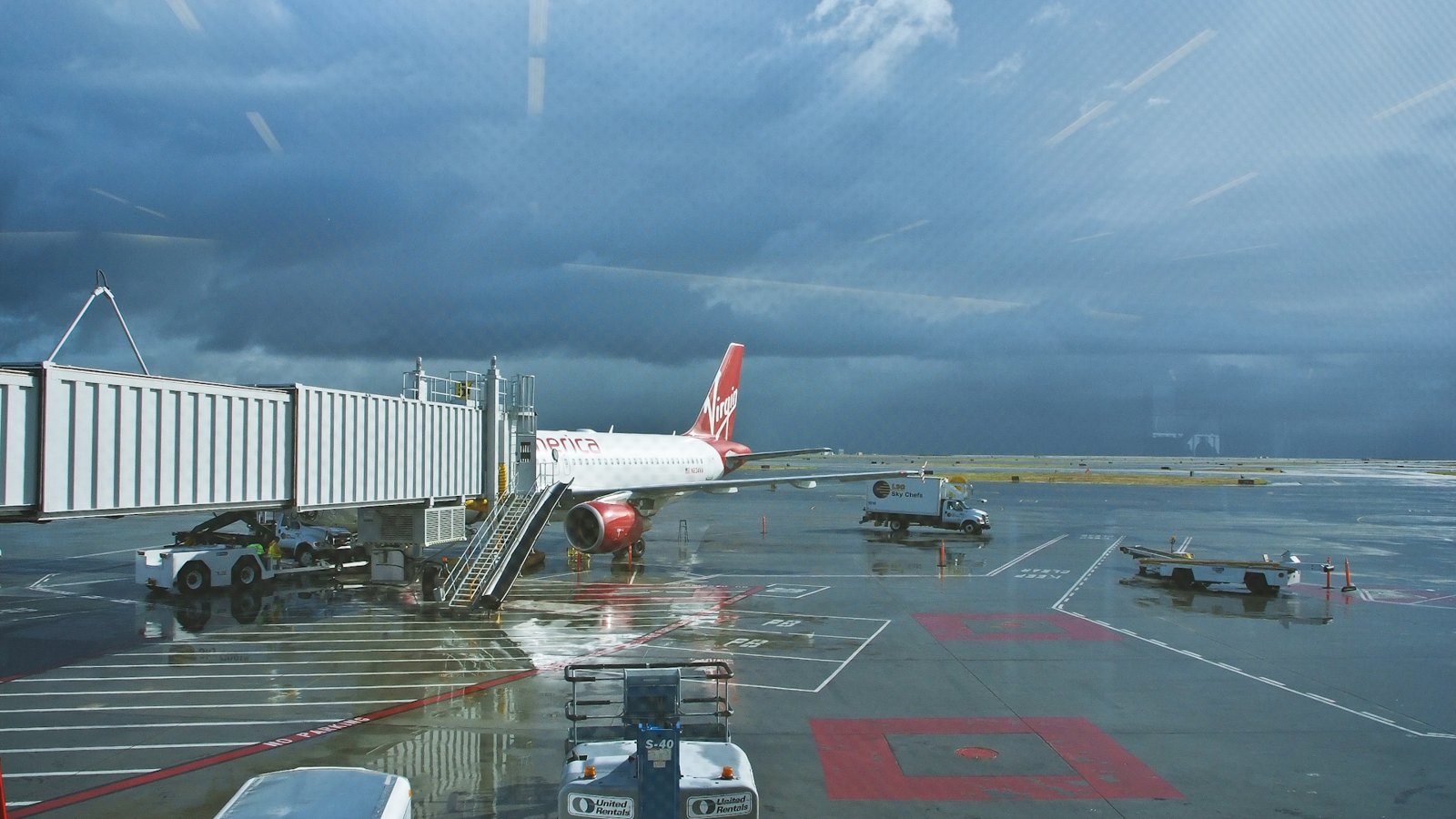
Featured image: Rain clouds over the tarmac, seen from Terminal 2 at San Francisco International Airport. Photo by Moto “Club4AG” Miwa via Wikimedia Commons, CC BY 2.0 (cropped).